Powerjet®
Parts Washers & Insulation
When was the last time you purchased a non-insulated refrigerator? Or a non-insulated hot water heater? Probably not recently. However, many Automatic Parts Washers, which are essentially hot water heaters, are not insulated against heat loss. This is despite the fact that over the lifetime of a parts washer, heating costs are often substantially more than the initial purchase price of the washer.
For example, to heat 100 gallons of water 80° (approximate increase from ambient temperature to 150° operating temperature) requires approximately 17 Kilowatts of electricity. With electrical rates ranging up to $.20 per kilowatt-hour, when you factor in the faster temperature recovery rate each time the pump is activated and each morning when the parts washer is turned on, the energy usage over a one years period can be quite substantial. Insulation of the wash tank can dramatically cut energy usage, often saving up to $500 per year.
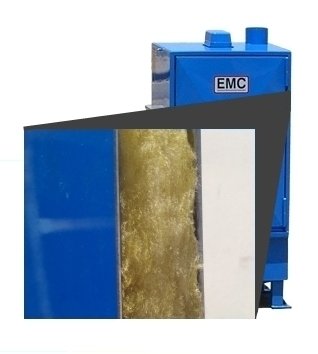 However, increased energy usage is not the only drawback of non-insulated parts washers. Uninsulated parts washers operating at normal cleaning temperatures (140 deg F to 180 deg F) have extremely hot surfaces, which can scald and burn personnel. In addition, this wasted heat is added to the workspace, increasing building cooling costs and making for an uncomfortable work environment.
Finally, and often most critical, an insulated parts washer is more likely to maintain it's proper operating temperature under heavy usage conditions. The constant opening of the wash cabinet door and on/off action of the pump accelerates the drop in temperature of the wash solution overwhelming the ability of the heating system to maintain temperature.
Partial insulation of wash cabinets, offered by some manufacturers, is usually done with prefabricated panels attached to easily accessible areas. This is better than nothing but is somewhat akin to leaving the refrigerator door only slightly open. Full insulation of the walls, roof, and door provide the most efficient and costs effective solution for cleaning efficiency, energy conservation, and operator safety.
Powerjet® Info